Live on Apple App Store | 5.0 rating | v2.0 current release
Overview
My Role: Lead Designer — Branding, User Flows, Wireframing, UI Design, Prototyping
Platform: iOS (primary)
Timeline: v1.0 beta launched mid-September 2025, v2.0 released February 2025
Status: Live on Apple App Store
Live link: apps.apple.com/us/app/pitch-beast/id6751128494
Context
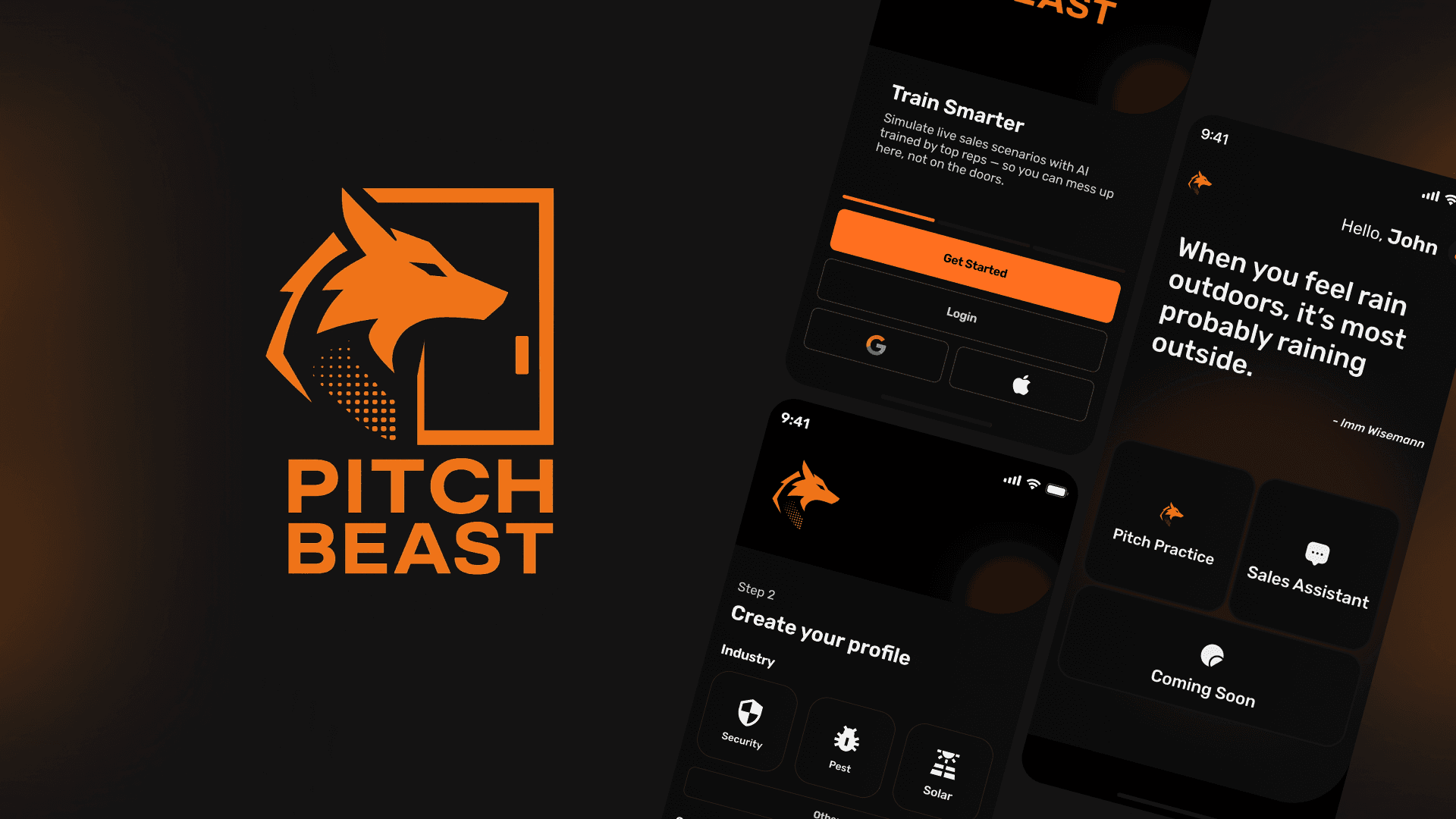
PitchBeast is a mobile sales training app built specifically for door-to-door sales professionals. The product simulates real client interactions through AI voice and text roleplay, analyses the user's pitch, and coaches them on handling objections. The initial release targeted three industries — solar, smart home security, and pest control — and expanded significantly in v2.0. The core product insight: most sales reps only practise in the field, between doors, often in a car. Every design decision flows from that usage context.
The Problem
Traditional sales training is expensive, infrequent, and disconnected from the rep's daily reality. Group training sessions happen monthly at best and are forgotten within days. There was no tool that let a rep practise a realistic client conversation at 7pm, get specific feedback on their pitch, and return to the next door better prepared. The specific business problem: new reps had high drop-off in the first 30 days because they had no way to build confidence between their first and tenth doors.
My Role and Constraints:
I was the lead and only designer on PitchBeast across all versions. I owned branding, user flows, wireframes, and all UI design from zero to dev-ready for v1.0 and v2.0. The critical constraint: the app is used in a car, with one hand, often mid-workday. No tolerance for long-form reading. AI-generated conversation output is variable in length and content, requiring UI that accommodates non-deterministic output gracefully.
Research and Discovery:
I studied door-to-door sales patterns across solar, pest control, and security to understand the daily rhythm: drive to a neighbourhood, work a street, take a break in the car, repeat. The practice window is the car. I reviewed existing tools (Gong, Chorus, Speeko) and confirmed they were all built for post-call review by managers, not for pre-door practice by the rep. PitchBeast needed to be the rep's tool in the field, not the manager's reporting tool after the fact.
Secondary finding: sales reps are competitive and ego-protective. Any challenge or scoring mechanism needed to feel self-directed rather than imposed or publicly visible before the rep was ready.


Key Design Decisions:
Decision 1: Objection coaching via named AI personas, not difficulty labels
The v2.0 objection coaching feature uses four named personas: Friendly Frankie, Skeptical Sam, Defensive Karen, and a Random mode. Abstract difficulty ratings (Easy/Medium/Hard) do not give the rep a mental model of who they are practising against. Named personas with described personalities create a realistic preparation context: "I keep losing deals with Skeptical Sam types." Self-selection preserved the rep's sense of control and dignity, both critical for engagement with a competitive user type.
Decision 2: Close Practice as a separate module from Pitch Practice
Close Practice was added in v2.0 as a distinct mode. The distinction matters: pitch practice starts from the beginning of the sales conversation. Close practice starts where the prospect has already agreed to engage and the rep needs to move from conversation to commitment. The AI model enters the simulation having already agreed to discuss the product. Two flows, two AI conversation architectures, two feedback criteria.
Decision 3: Voice-first interaction with text as fallback
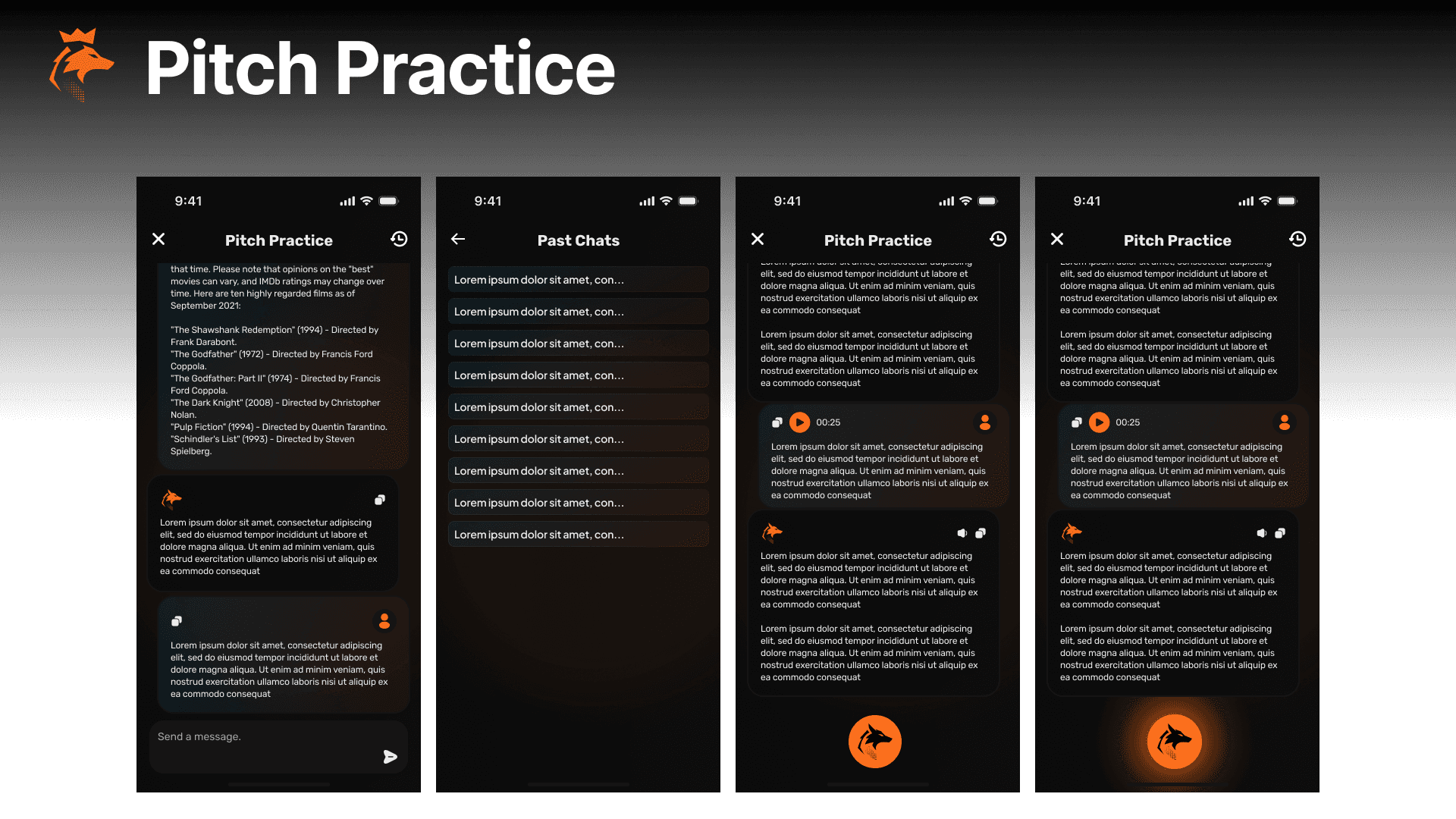
The primary interaction mode for all sessions is voice, not text. The usage context (one hand, car, ambient noise) made this correct over the initial text-first assumption. Text remains fully available for silent environments, but the UI hierarchy places voice as the default state. The practice screen was designed with the voice button as the single dominant CTA, with text as a secondary option below.
The Solution
v1.0 delivered: AI text and voice roleplay for sales pitches across solar, smart home security, and pest control. A Sales Assistant AI for in-field objection strategy and coaching support. User profile creation with industry and sales organisation setup. Subscription system with monthly, 3-month, and annual pricing tiers.
v2.0 (current live version) added: Pitch Transcription — users upload a recording of a real pitch or close, the AI transcribes and provides analysis. Objection Coach with four AI personas at three difficulty levels, each presenting real customer objections the user must respond to verbally. Close Practice as a separate simulation starting at the negotiation phase. Expanded verticals: Window Washing, Pressure Washing, Roofing, Lawn Care, Garage Door Services, Junk Removal, and Insurance added to the original three.
Key screens designed: Onboarding, Home dashboard, Industry and product selection, Voice roleplay session, Text roleplay session, Pitch analysis results, Objection Coach persona selection, Objection flashcard response interface, Close Practice session, Score and streak summary, Profile and subscription management.

Outcome and Impact
PitchBeast v1.0 launched on the Apple App Store in September 2025. v2.0 followed in November 2025 with the full objection coaching, transcription, and close practice feature set. The app holds a 5.0 rating from initial users. Early reviews specifically highlighted the persona-based objection coaching as a standout feature.
What is coming next:
The roadmap includes tonality and emotion scoring, a personal sales activity tracker, an objection customiser for market-specific scenarios, and team features with manager oversight. These are planned additions, not current functionality.
Reflection
The persona naming for objection coaching was a small creative decision with disproportionate product impact. Abstract labels would have worked functionally. Named personas with distinct personalities created a training mental model reps could reason about and return to. "I want to practise Skeptical Sam again" is a fundamentally different user behaviour than "I want to try medium difficulty again." Good UX naming is not cosmetic. It shapes how users think about and return to a product.
Disclaimer: The project discussed herein was undertaken as a part of the Tech Goes Global team. The rights to this project are jointly owned by the client and the studio. This case study is presented solely to showcase my individual contributions to the project.