Branding
Fully live at prdikt.com | Validated by 12 product leaders and engineers

Overview
My Role: Lead Designer — Branding, User Flows, Wireframing, UI Design, Prototyping
Platform: Web application, marketing website
Timeline: Figma prototype tested first, Early Beta with project creation flow only, full production version launched after industry leaders' validation round
Status: Fully live at prdikt.com
Context
Prdikt is an AI-powered project planning and management platform that generates structured project artifacts (user stories, sprint plans, features, roadmaps, reports) from PRD uploads or plain-text prompts. It integrates directly with existing project management tools and is positioned as a complement to and eventual competitor of Jira, Trello, and Linear. Note on terminology: "initiative" was used early in development but changed back to "project" during the build phase. All references here use the final term.
The Problem
Product managers spend 30 to 40 percent of their working week creating planning documentation: writing PRDs, breaking them into stories, organising them into sprints, and re-entering the same information into Jira in a different format. The information is transcribed two to three times before any actual work begins. This is repetitive, error-prone, and leaves less time for the strategic and execution work product managers are actually hired to do.
My Role and Constraints
I was the lead and only designer on Prdikt from zero to shipped. I owned all branding, the full web application, and the marketing website. The primary design constraint was AI-generated content: the output is non-deterministic, variable in length, and editable by the user post-generation. Standard UI patterns built for fixed content do not apply to a surface where every piece of content might be different every time.
Research and Discovery
I conducted a competitive analysis of Jira, Trello, Linear, Notion, and Asana to understand the interaction conventions users expected before encountering something different. The key finding: every existing tool was built on the assumption that a human creates the initial structure manually. Prdikt inverts this — the AI creates the structure, the human edits and approves. This required designing for a fundamentally different first interaction.
I also studied how users interact with AI-generated text in tools like ChatGPT and GitHub Copilot. Finding: UI that presents AI suggestions confidently and completely formatted results in higher adoption than UI that presents them tentatively. For Prdikt, generated project artifacts should appear polished and actionable from first render — inviting refinement rather than demanding wholesale rewriting.
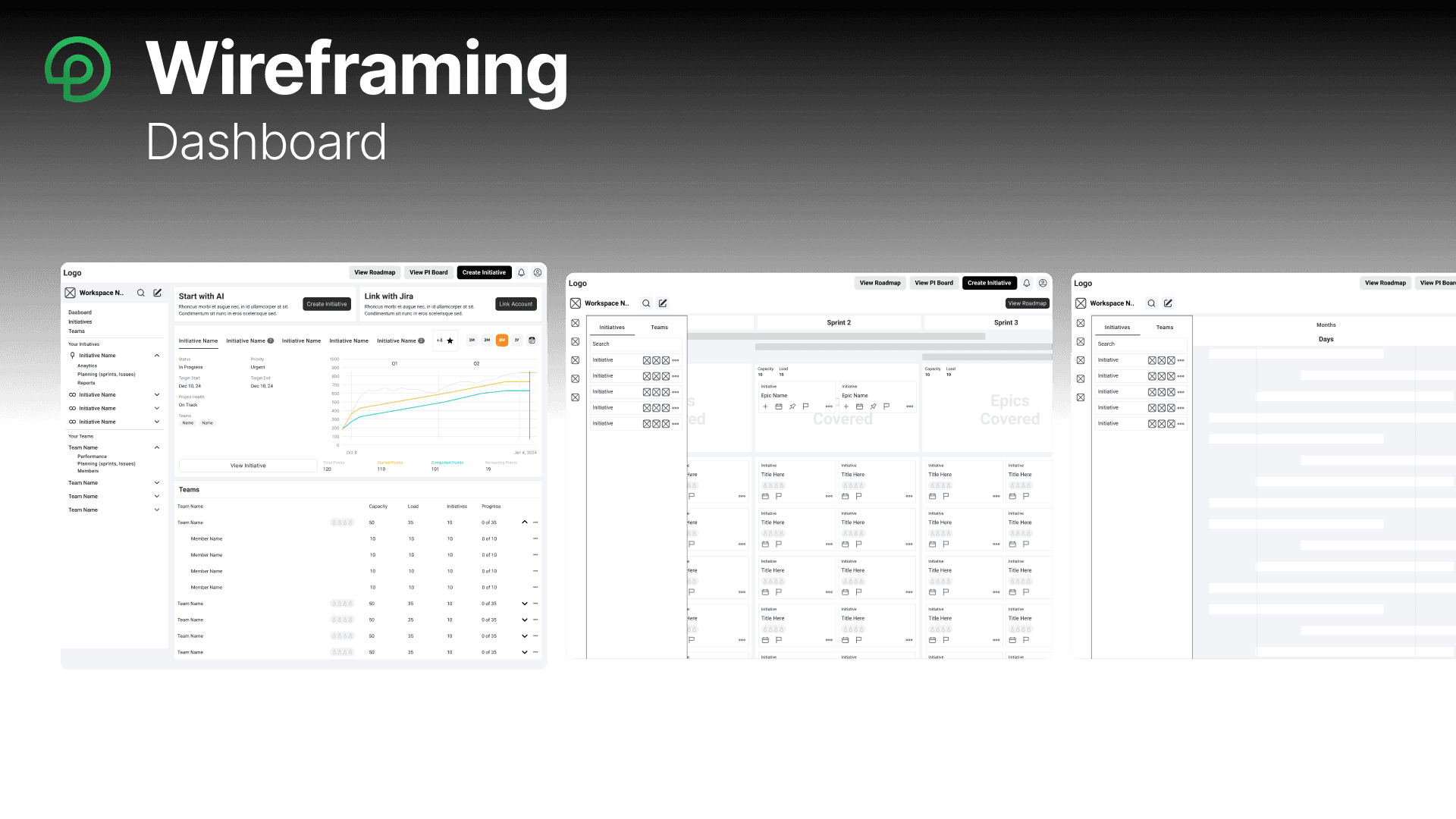
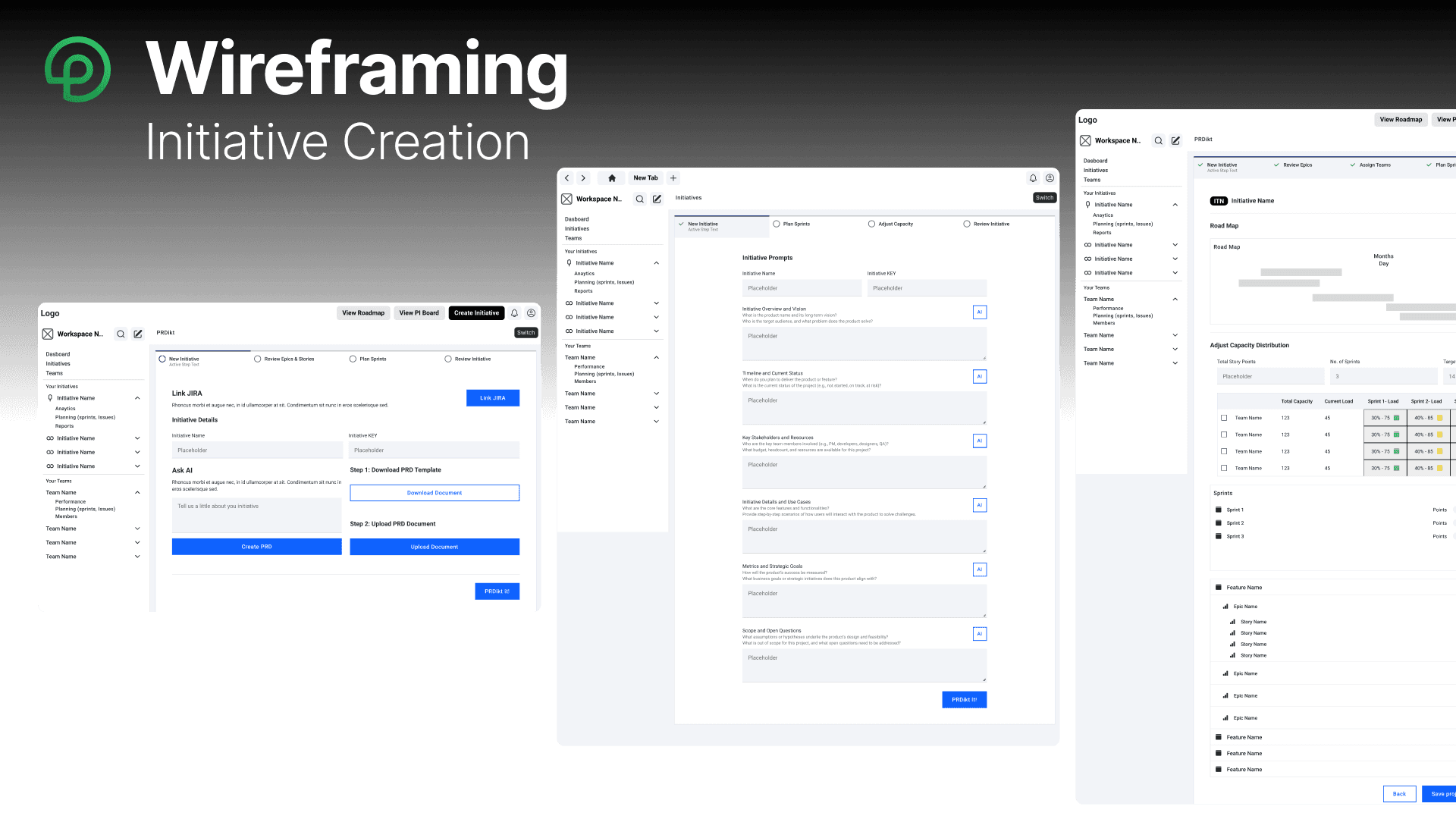
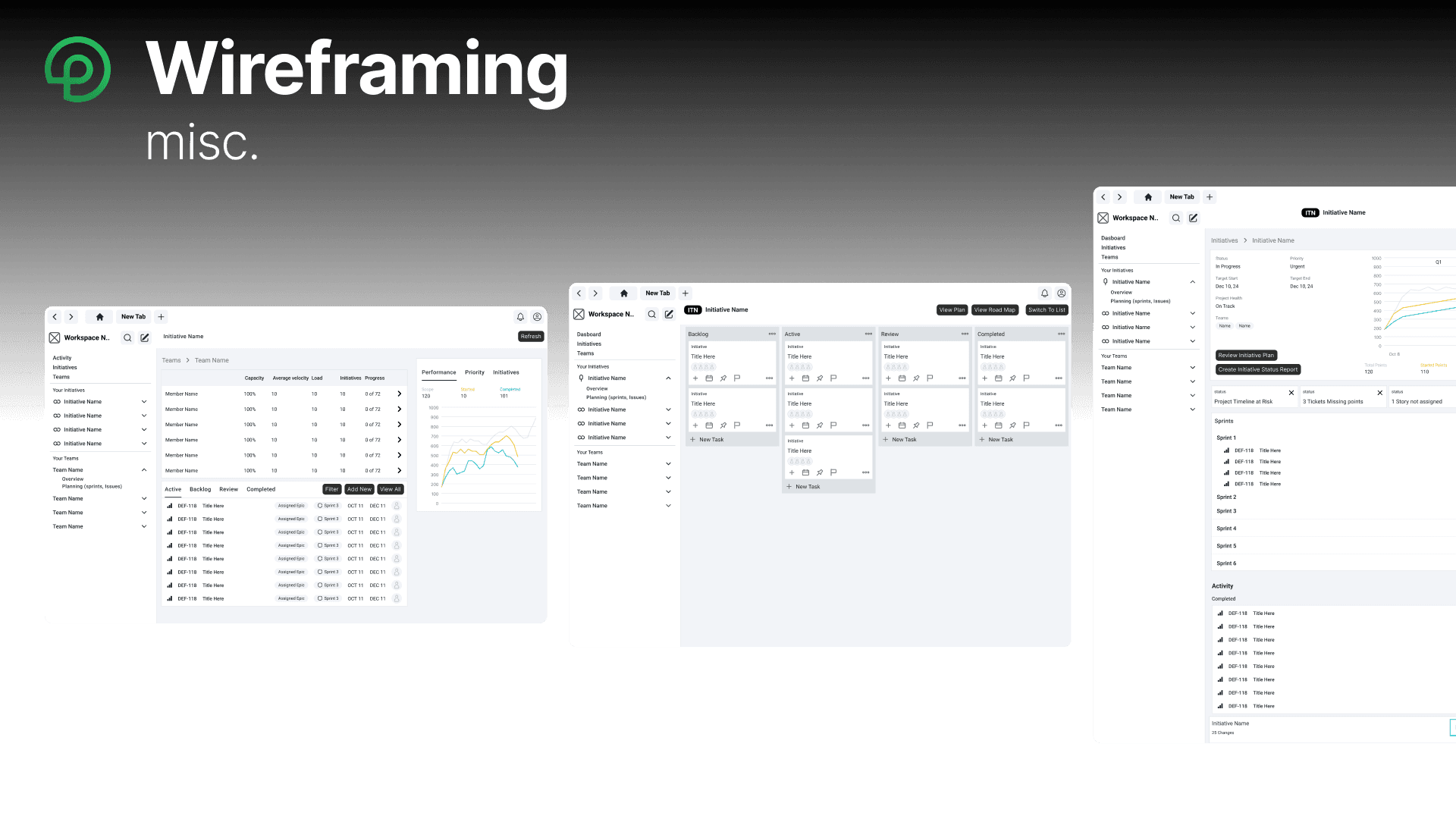
Key Design Decisions
Decision 1: Prompt input as the primary entry point, not a structured form
The initial brief included a structured setup form (project name, team size, sprint length). I replaced it with a plain-text prompt input as the primary entry point. A product manager's mental model when starting a project is narrative ("I need to build X for Y users by Z date"), not tabular. A prompt input preserves that mental model and reduces time to first value. Configuration fields remained available in settings for users who preferred structure.
Decision 2: Separating the generation experience from the work surface
Early designs merged the prompt interface with the output in a single scrolling view. I separated them into two distinct surfaces: a generation screen (prompt input, context setting) and a workspace screen (review, edit, organise, assign). The transition between them is the moment of AI output delivery, treated as a purposeful reveal rather than an inline append. This reduces cognitive overload at the moment of maximum uncertainty — the user does not yet know what will be generated.
Decision 3: Project hierarchy consistency across all views
The product logic hierarchy is Project, Feature, Story. All views — sprint board, roadmap, ticket management, team assignment — reflect this hierarchy consistently. Every navigation from project overview to sprint to story keeps the hierarchy visible and navigable without losing context. This structural consistency was the single decision that made the product feel coherent across a large and complex feature set.
The Solution:
Prdikt turns a plain-text prompt or uploaded PRD into a complete set of project planning artifacts in seconds. The active feature set covers: project creation with AI-generated feature and story breakdowns, in-app ticket management with create, assign, and manage flows, team management, sprint management, roadmap view, onboarding and user guidance, and pricing and sign-up flows.
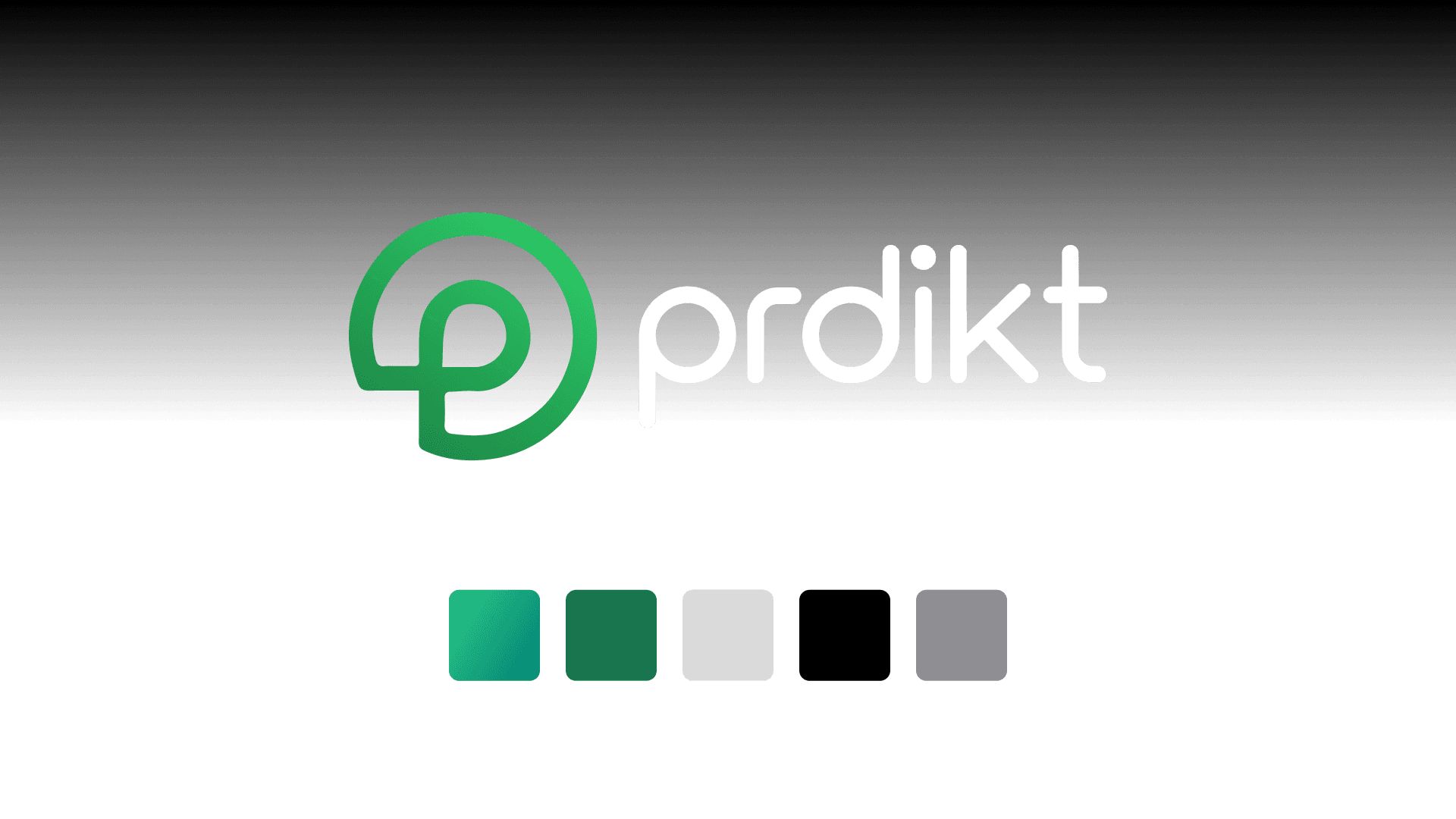
The design language is clean, professional, and data-forward. Dark header, high-contrast data surfaces, teal accent for AI-triggered actions. Designed to look like a tool that senior product people would use, not a consumer productivity app.


The Launch Sequence:
Prdikt did not ship as one monolithic release. It launched in three stages:
Stage 1: Figma prototype tested with a small internal group to validate the core project creation flow and AI generation concept before any development began.
Stage 2: Early Beta launched with the project creation flow only, allowing real users to interact with the core value proposition (generate a project structure from a prompt and manage it) before the full feature set was built.
Stage 3: Based on Early Beta feedback, the platform was expanded with sprint management, team management, ticket management, onboarding flows, pricing and sign-up, and roadmap view. This complete version was validated by 12 product leaders and engineers via shared test access before the full public launch.
Outcome and Impact
Prdikt progressed from Figma prototype to Early Beta to full validated production launch. The complete version was tested by 12 product leaders and engineers who provided feedback incorporated before the public launch. Fully live at prdikt.com. Design-to-full-production timeline: approximately 10 weeks across all three stages.
What is coming next
Mid-term features in active development include Prdikt Insights analytics, story point estimation tools, Jira, Linear, Slack, Figma, Github integrations, and project report exports.
Reflection
The Early Beta approach was the correct decision. Launching with the project creation flow alone before building everything else allowed real user behaviour to confirm the core value proposition before investing development time on the full feature set. The feedback from Early Beta directly shaped feature prioritisation in the complete version. Design the thing that proves the idea. Then let real usage guide what to build around it.
Disclaimer: The project discussed herein was undertaken as a part of the Tech Goes Global team. The rights to this project are jointly owned by the client and the studio. This case study is presented solely to showcase my individual contributions to the project.