Social Media Marketing
Live on App Store, Google Play, and shoplocalfashion.com
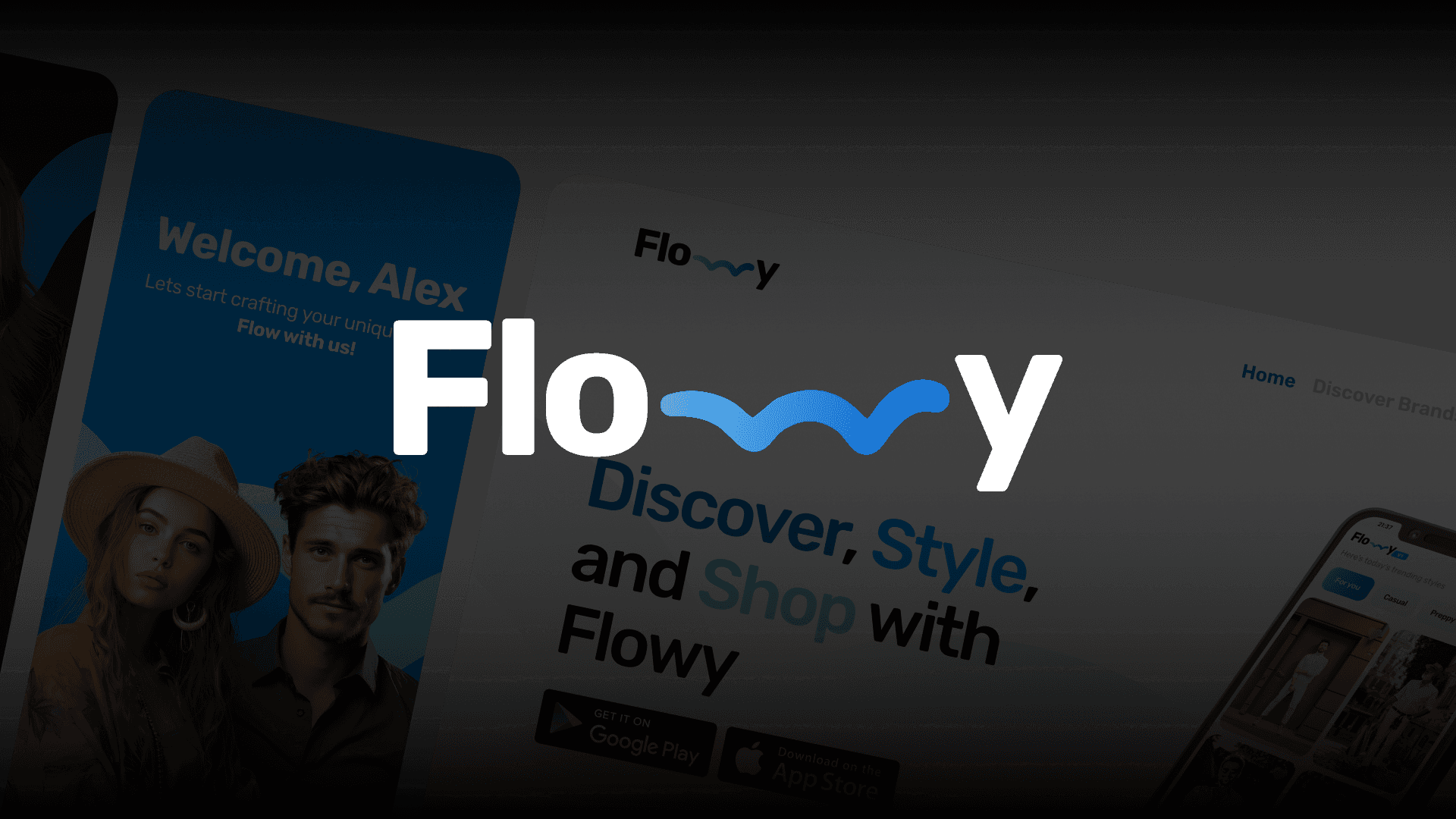
My Role: Lead Designer — Branding (Flowy), Rebranding (SLF), UI/UX Design (mobile app and website), Social Media Stylesheet and Templates
Platform: iOS and Android mobile app, marketing website
Timeline: Flowy MVP designed and launched, then rebranded and repositioned as SLF
Status: Live on App Store and Google Play as SLF, website at shoplocalfashion.com
Context
Flowy began as an AI-powered fashion companion app designed to generate personalized outfits, manage a digital wardrobe, enable social sharing, and support in-app fashion e-commerce. The product was designed mobile-first for iOS and Android, with a marketing website and AI outfit generation as its headline feature.
The client made a strategic decision to pause the AI generation feature and shift focus to supporting local fashion stores and enabling users to discover, style, and shop local fashion brands. The product was rebranded from Flowy to SLF (Shop Local Fashion), repositioned around brand discovery rather than AI generation, and relaunched across the same platforms with a new visual identity, a new UX focus, and a social media presence built from the ground up.
In addition to the UI/UX design, I designed the Flowy branding, the complete SLF rebrand, and created a social media stylesheet and template system for ongoing content production on Instagram and TikTok.
The Problem
Flowy Problem: Fashion is personal and contextual. Getting dressed every day requires knowing what you own, what works together, and what suits the occasion — a cognitively demanding set of decisions most people make without any tool to support them. AI-powered outfit generation was positioned as the solution: the app knows your wardrobe, understands your style, and surfaces a relevant outfit for any context without manual effort.
SLF Problem: Local fashion brands have no dedicated discovery platform. They exist on Instagram and TikTok but are easily buried by global brands with larger marketing budgets. Fashion-conscious consumers who want to support local designers and discover new independent brands have no destination built for that intent. The pivot identified this as a more immediately addressable market opportunity than AI generation at the time.
My Role and Constraints
I was the lead and only designer on both Flowy and SLF. I owned the Flowy brand identity, the full mobile app design for both AI versions (iOS and Android), the marketing website, the SLF rebrand and visual identity system, the SLF app redesign (simplified scope per client direction), the SLF website, and a social media stylesheet and template library for @shoplocal.fashion on Instagram and TikTok.
The primary constraint on SLF was a deliberately reduced scope: the client wanted to launch a version focused on brand discovery and browsing without the full AI generation feature set of Flowy. The design had to be complete and polished while respecting a significantly narrower feature scope. Designing a minimal product that still feels intentional and sufficient — not reduced — was the UX challenge.
Research and Discovery (Flowy):
I studied existing wardrobe management and AI styling apps (Stylebook, Smart Closet, YesPlz) and conducted a SWOT-style competitive analysis to understand the feature landscape and opportunity gaps. The Flowy brief called for: accurate weather forecasts as outfit context (integrate with weather data), wardrobe management via photo and AI, AI outfit generation based on wardrobe and occasion, seasonal hub content, social sharing of outfits, e-commerce integration, and future features including health trackers and multi-language support.
The primary discovery: no existing app combined AI generation with a social sharing layer and in-app shopping in a single coherent experience. Most AI styling apps were utilitarian. The Flowy brief added a social and discovery layer on top of utility.
Research and Discovery (SLF):
For the SLF pivot, I researched the local fashion discovery landscape and the behaviour of fashion-forward consumers who actively seek out independent brands. Key finding: the discovery experience was the entire product. Without AI generation as the primary feature, the browsing and discovery interface had to be the hero interaction — the UX equivalent of walking into a curated boutique, not searching a database.

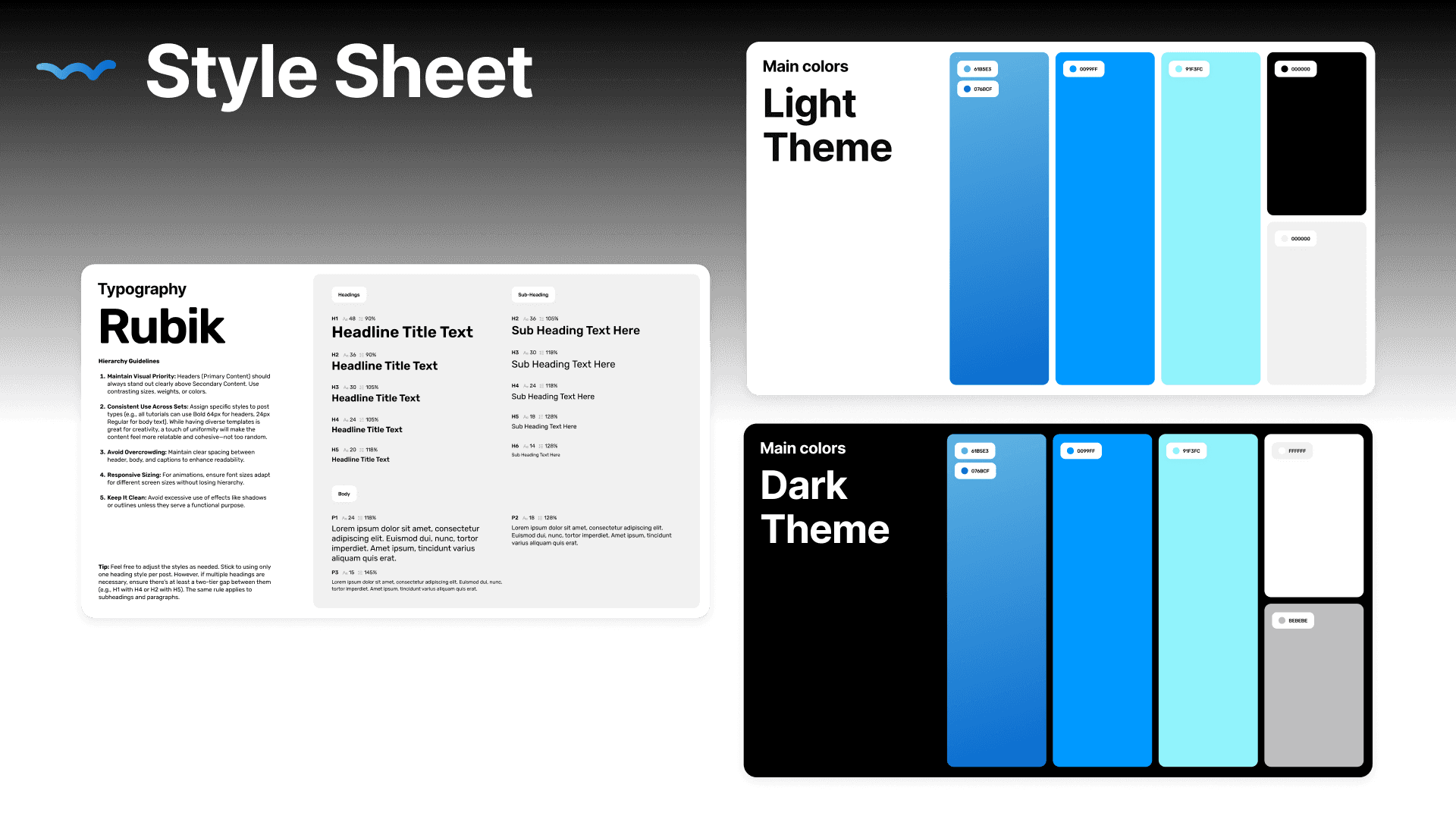
Key Design Decisions
Decision 1 (Flowy): AI generation as a background service, not a command
The AI outfit generation UX was designed as a service that surfaces suggestions based on wardrobe data, weather, and occasion — not as a search bar or a manual prompt. The user inputs their context (going to work, attending a dinner) and the AI returns outfit options from their own wardrobe. The interaction model was recommendation-first, not query-first. This decision shaped the home screen architecture: instead of a search or generate prompt, the home screen surfaced contextual outfit cards ready to accept or modify.
Decision 2 (SLF): Browsing as an editorial experience, not a database search
With AI generation paused, the core SLF interaction became brand discovery browsing. I designed the discovery experience around an editorial model: weekly brand highlights, curated collections, and featured local brands surfaced by the platform — not by the user's search query. The tone was boutique, not marketplace. A user landing on the SLF browse screen should feel like they are being introduced to something curated for them, not confronted with a filter panel.
Decision 3 (SLF): Social media as a product extension, not a marketing channel
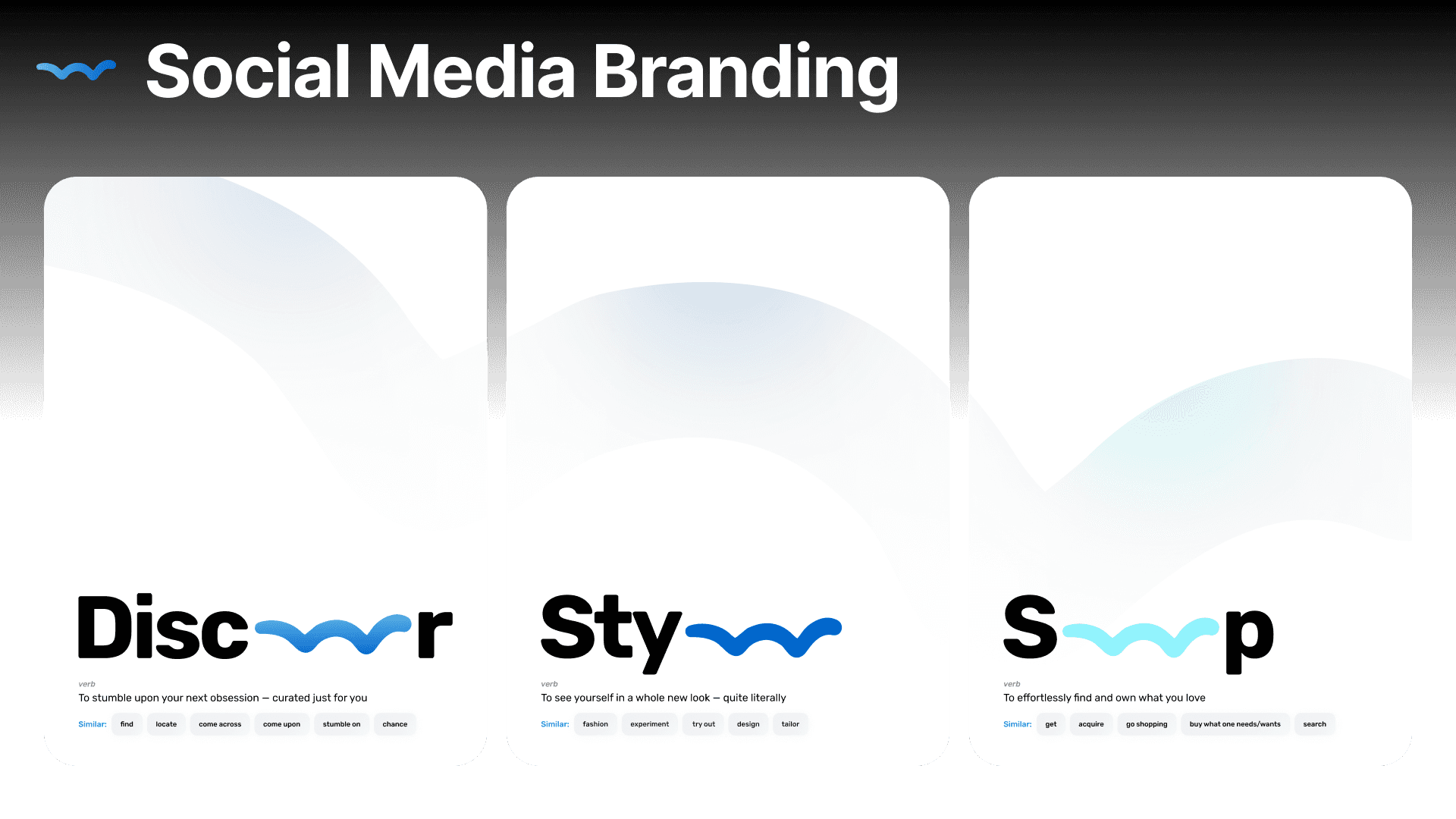
The SLF Instagram and TikTok accounts were designed with the same editorial voice as the app. The social media stylesheet I created defined how brand spotlights, product features, and community content would be presented consistently across posts. The stylesheet created a visual system where a consumer could see an Instagram post and immediately recognise the SLF aesthetic — the social channel became a discovery surface for the app, not just a promotional one.
The Solution
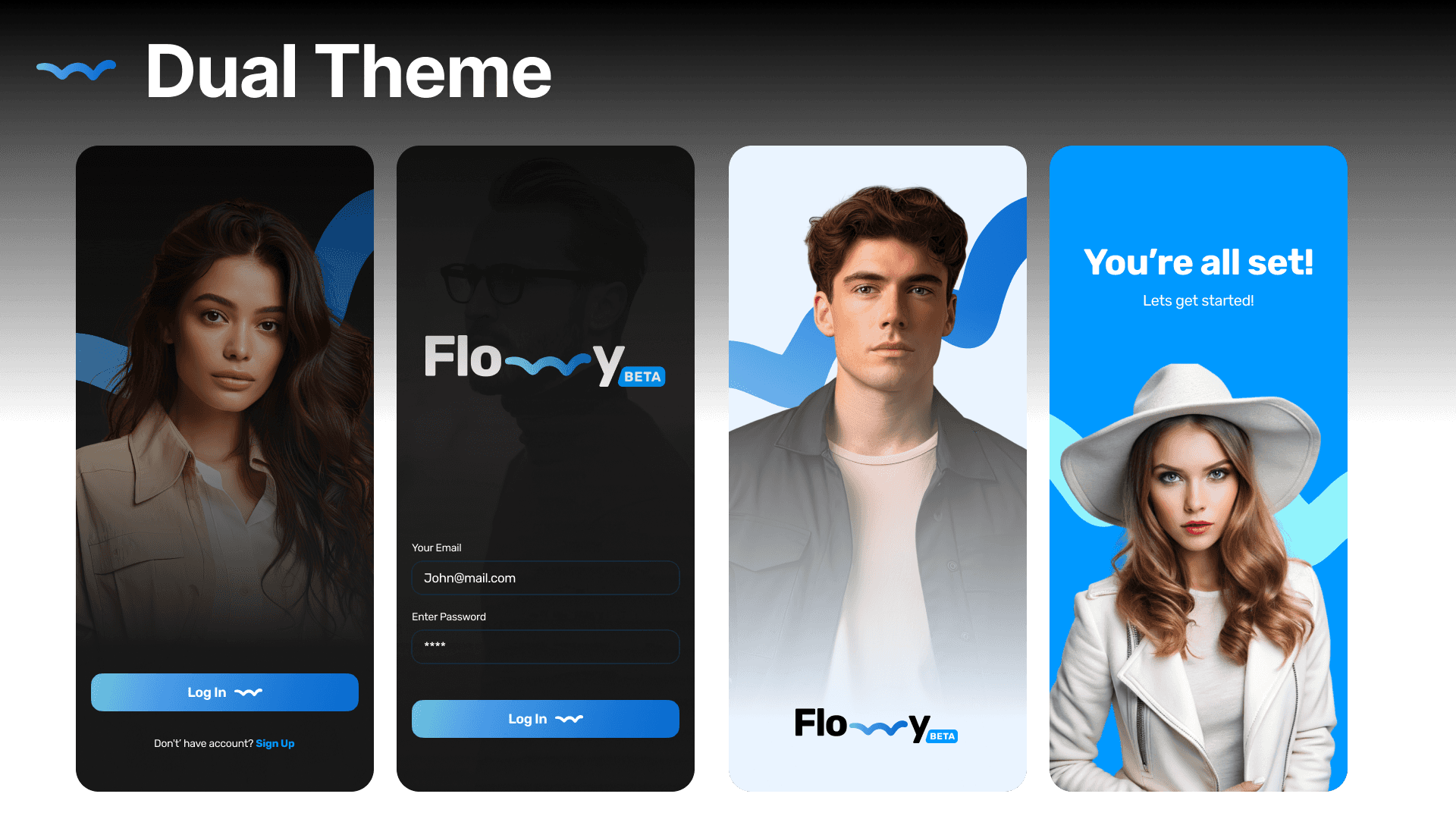
Flowy (original): AI-powered fashion companion covering wardrobe management via photo, AI outfit generation based on wardrobe and occasion context, weather-aware outfit suggestions, social sharing of outfits, in-app e-commerce, and a seasonal content hub. Full branding, iOS and Android design, and marketing website designed and shipped.
SLF (current live version): Local fashion brand discovery platform covering brand browse with editorial curation, weekly brand highlights, brand discovery by location and style, app and website listing for local fashion stores, and in-app shopping integration. Available on App Store, Google Play, and shoplocalfashion.com. Instagram and TikTok presence with a designed stylesheet and template system. Email subscription for insider content. Pathway for local brands to request a feature (SLF@shoplocalfashion.com).



Outcome and Impact
SLF is live on the Apple App Store, Google Play, and at shoplocalfashion.com. The @shoplocal.fashion accounts are active on Instagram and TikTok. The original Flowy design established the product architecture, visual identity, and UX model that SLF was built on. The rebrand preserved what was working (the clean, editorial visual language and discovery-first UX) while repositioning the product around a more immediately executable market opportunity.
Reflection
The SLF pivot taught me that a product's visual identity can survive a pivot better than its feature set can. The Flowy brand had warmth, editorial quality, and a fashion-forward aesthetic that translated directly to SLF. The AI generation feature did not survive the pivot — but the design language did. When a rebrand preserves visual equity while repositioning the product, it is because the original identity was built around values and aesthetics, not around specific features. Values transfer. Features change.
Disclaimer: The project discussed herein was undertaken as a part of the Tech Goes Global team. The rights to this project are jointly owned by the client and the studio. This case study is presented solely to showcase my individual contributions to the project.